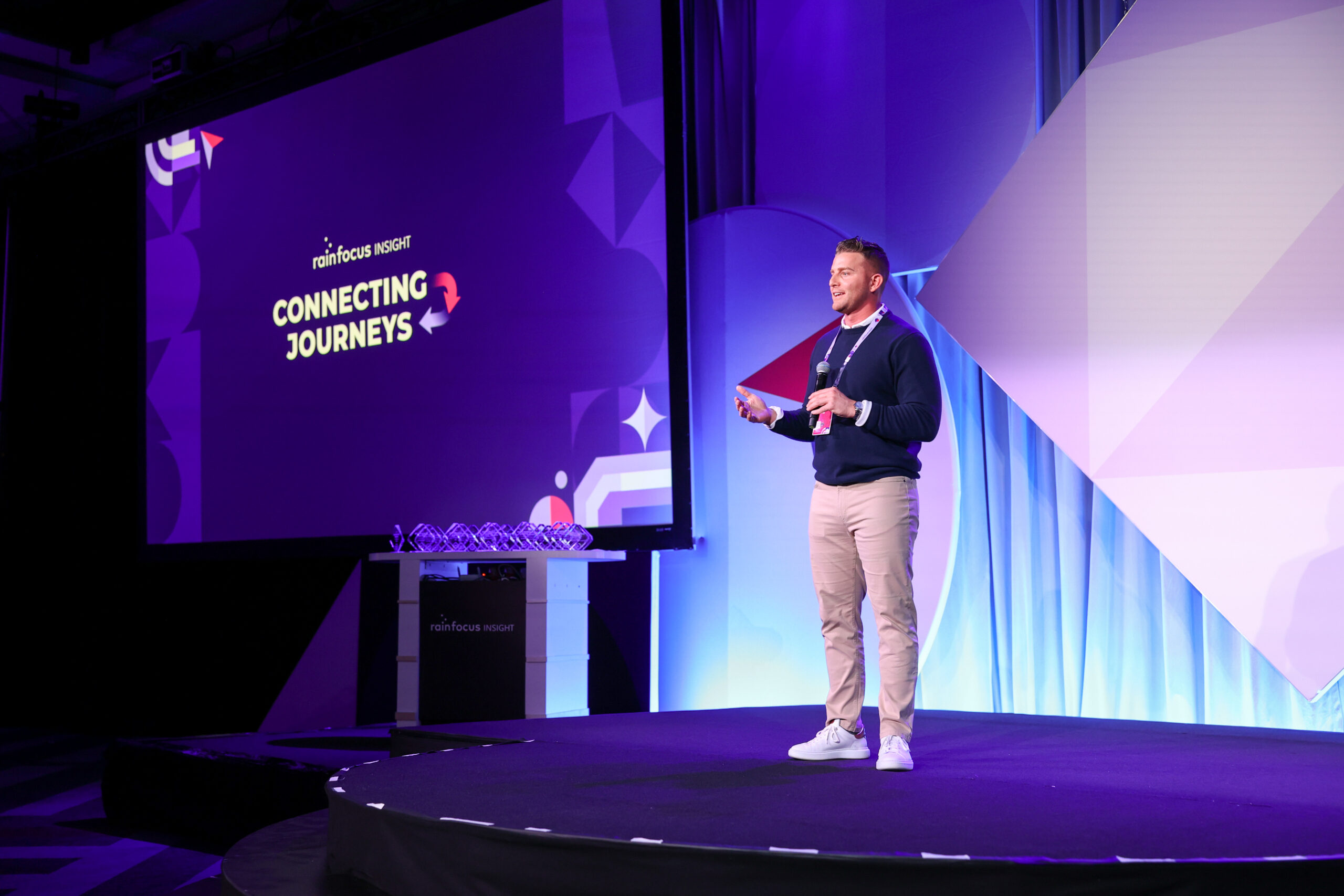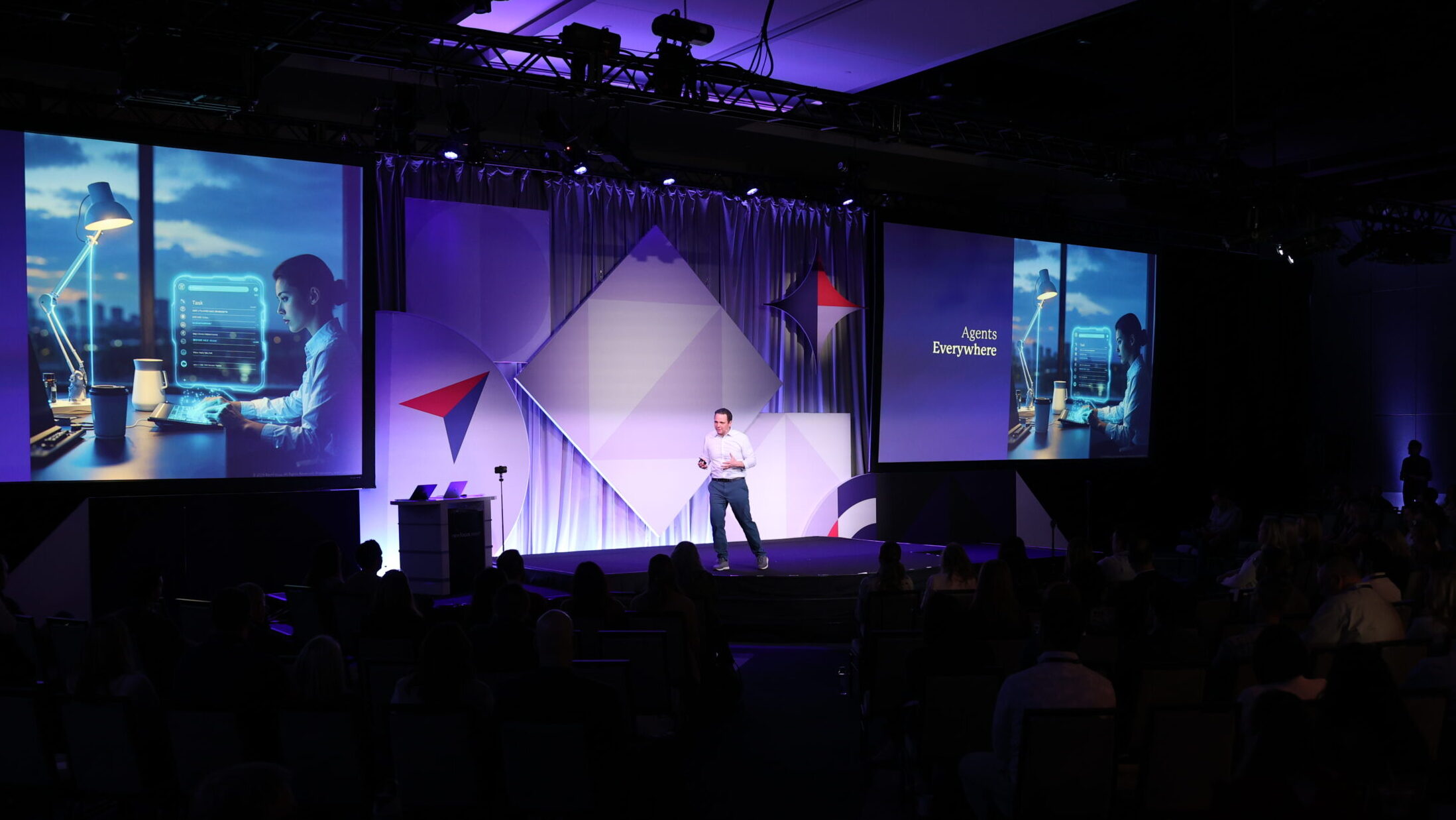
“In the next three years, so much will change,” said Brent Turner, EVP of Strategy and Solutions at Opus Agency. During his keynote session at INSIGHT, Turner and Brian Gates (SVP of Go to Market and Strategy at RainFocus) outlined six shifts that will shape events in the coming years. Using a metaphorical concept car, they showcased what is possible when event professionals embrace change.
Here are the biggest predicted changes, and tips on how event marketers can prepare for each shift:
1. The Live Rush
The shift: The third space is back, meaning people are flocking to meetups, coffee shops, and clubs. As a result, events have more competition for people’s time.
How to prepare: Gates explained the importance of becoming “value obsessed” in your marketing to capture a customer’s attention. The new benchmark for success is a return on engagement, measuring offline engagement with the same speed and accuracy as online data.
2. New Opportunities in the Global South
The shift: Global growth is shifting; within four years, nine of the ten largest cities will be in the global south. This means the total addressable market is moving, requiring portfolios to further expand into regions like the Middle East, Latin America, and Southeast Asia.
How to prepare: Event marketers must develop an infrastructure for growth and automate systems to run experiences in these local geographies. They must provide a sense of belonging to local audiences while minimizing time-consuming extra work for each city.
3. The “Stakeholder Economy”
The shift: People are replacing traditional institutions with brands to find their sense of purpose and identity. Because individuals are investing their identity in these brands, their expectations are increasingly high.
How to prepare: To keep up, event marketers need to bridge the gap between their business and audience needs, to ensure the experience continues seamlessly after the event ends.
4. A Greater Desire for An Interactive Life
The shift: Attendees want more interactive experiences, especially moments that cannot be recorded or summarized by AI. “If an event can be fully experienced via a transcript, it doesn’t need to be live,” Turner said.
How to prepare: Intentionally supporting spontaneity and tactile experiences will help you increase event value in the coming years. A focus on collaboration and networking separates great events from mediocre events.
5. Audiences’ Expectations for Connected Experiences
The shift: Attendees have come to expect personalized recommendations based on interactions they’ve had with companies in the past.
How to prepare: Event marketers can use predictive modeling and agentic AI to surface ideal content or connections, and then recommend them to an individual.
6. The Machine Layer (AI)
The shift: We are moving to a “bot-to-bot” B2B environment in which AI agents act as personal assistants, handling manual work like booking and scheduling. As more events implement this type of concierge experience, attendees will come to expect it at every event.
How to prepare: Begin using agentic AI, such as RainFocus Nexus, now. Set up a workforce of AI agents to solve attendees’ needs on your behalf and focus on high-value activities like building connections.
To watch the entire session on demand, visit rainfocus.com/insight.